Tribological System Solutions for
Extrusion & Metal Forming
We develop and manufacture high-temperature lubrication systems, solid lubricant sticks, bitumen-based lubricants, boron nitride & graphite dispersions, pastes, and technical mold coatings for extrusion plants and metal forming.
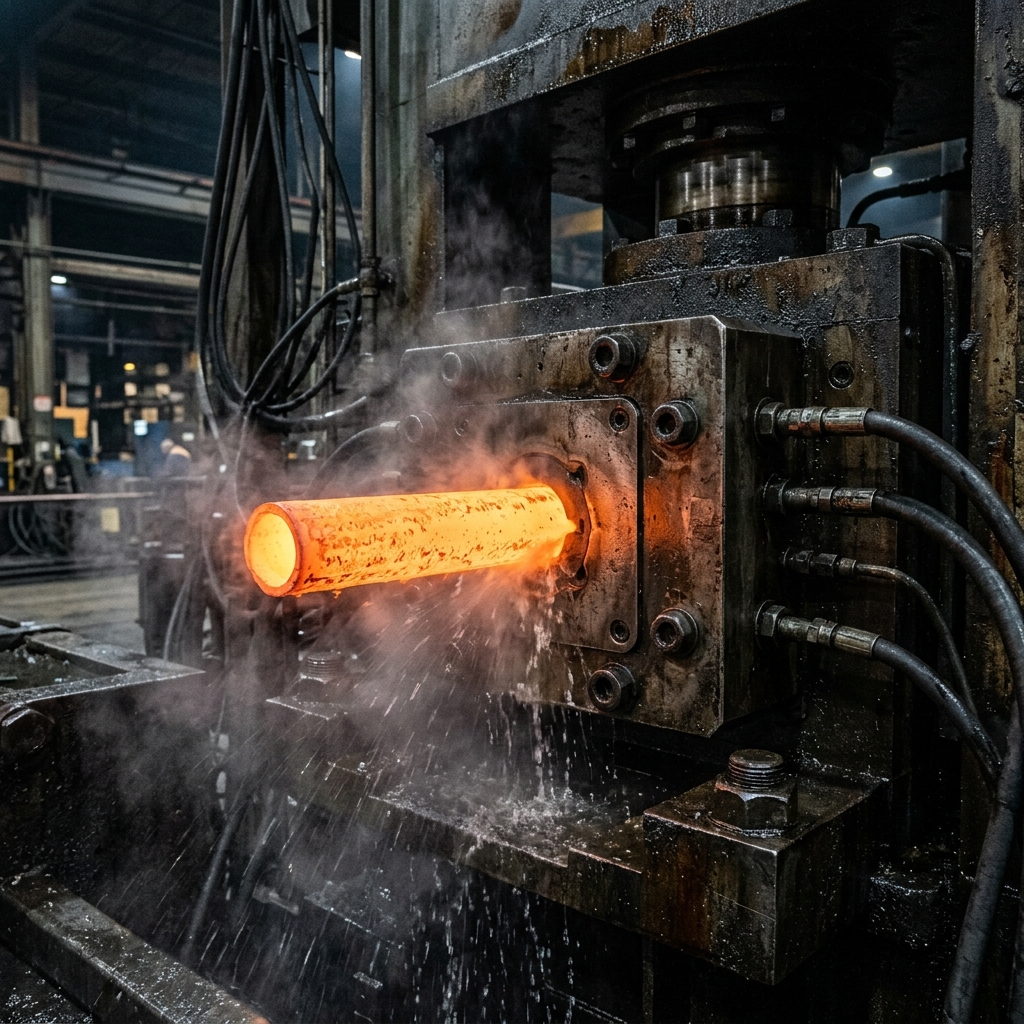
Synthetic carrier waxes sublimate completely and residue-free under shielding gas for ash-free thermolysis.
Analysis of Typical Process Instabilities
Thermo-Mechanical Die Wear
Extreme press temperatures above 800°C and high hydrostatic pressures lead to tool pick-up (cold welding) and abrasive erosion on the mandrel and die in cases of insufficient warm extrusion lubrication . Thermo-mechanical wear significantly shortens the tooling lifespan limits .
Carbon Residues (Annealing Stains)
Mineral oil-based lubricants tend to crack during thermal post-treatment (annealing) under protective gas. This results in carbonaceous deposits on the inner tube surfaces, which negate brazeability according to DIN EN 1057. Our evaporating synthetic waxes guarantee ash-free pyrolysis.
Boundary Layer Friction Instabilities
Fluctuating friction coefficients at the shear edges of the press tools cause structural inhomogeneities and wall thickness deviations. With stable sliding friction behavior in the extrusion process lässt sich die Fließgeschwindigkeit des Metalls homogenisieren and geometrische Toleranz sichern.
Molecular Protective Films for Friction Stabilization
Physical and Chemical Barrier Effect
PROMET process media are based on geometrically optimized synthetic waxes and additives for high-temperature lubrication. They form a closed, release-active boundary layer under extreme press pressures. After exceeding the process phase, the organic components sublimate without residue, without inducing metallurgical structural changes.
- Complete pyrolysis (TGA) at >350°C under N2/H2 atmosphere
- Solid-free formulation for compliance with DIN EN 1057
- Pressure stability of the lubricating film in the hydrodynamic drawing gap
- Thermal spreading and adhesion on hot-work tool steels
Tribological Optimization Protocol
01 / Tribological Parameter Intake
Recording of tool material, alloy composition, forming speed, and temperature spectrum.
02 / Rheological Formulation
Thermal design of melting and decomposition behaviors as well as adaptation of boundary layer adhesion, tailored to your press parameters.
03 / On-site Process Monitoring
Metrological monitoring of large-scale trials, analysis of press force progression and surface roughness Ra/Rz.
Development and Analytics under One Roof
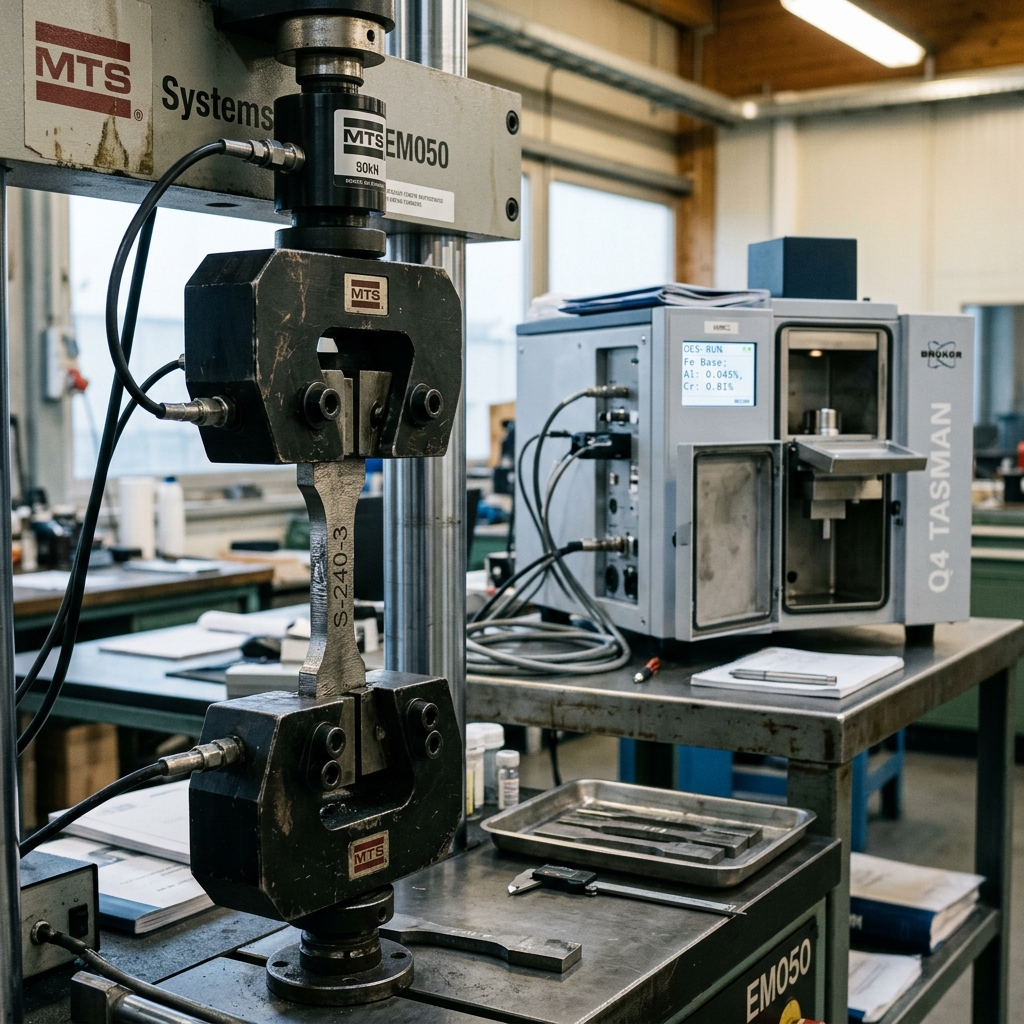
Application-Oriented Development
By using practical test methods such as thermogravimetric analysis (TGA), we match the melting profiles and lubrication behavior directly with your extrusion and forming processes. This ensures reliable separation, optimizes friction in the die gap, and minimizes tooling wear in continuous operation.
Years of Tribometry Research
REACh Compliant & Halogen-Free
Economic Proof (TCO) & OEE Enhancement
Maximization of Net Uptime
By eliminating metal pick-up, mechanical die cleaning cycles are avoided. This reduces setup and downtime and maximizes the OEE utilization rate of your extrusion press.
Reduction of Scrap Rate
Constant friction conditions in the drawing gap ensure dimensionally stable wall thickness tolerances from the start of pressing. Ash-free sublimation eliminates scrap caused by thermally induced surface defects.
Reduction of Tooling TCO
The reduction of adhesive friction force extends the service life of highly stressed mandrels and dies. This reduces tool circulation costs and extends maintenance intervals.
Optimize Interfacial Friction Behavior
Submit your process-specific operating data (materials, contact temperature, shear rate). Our tribologists and process engineers will conduct a material-friction analysis and create a detailed lubricant requirement profile.